

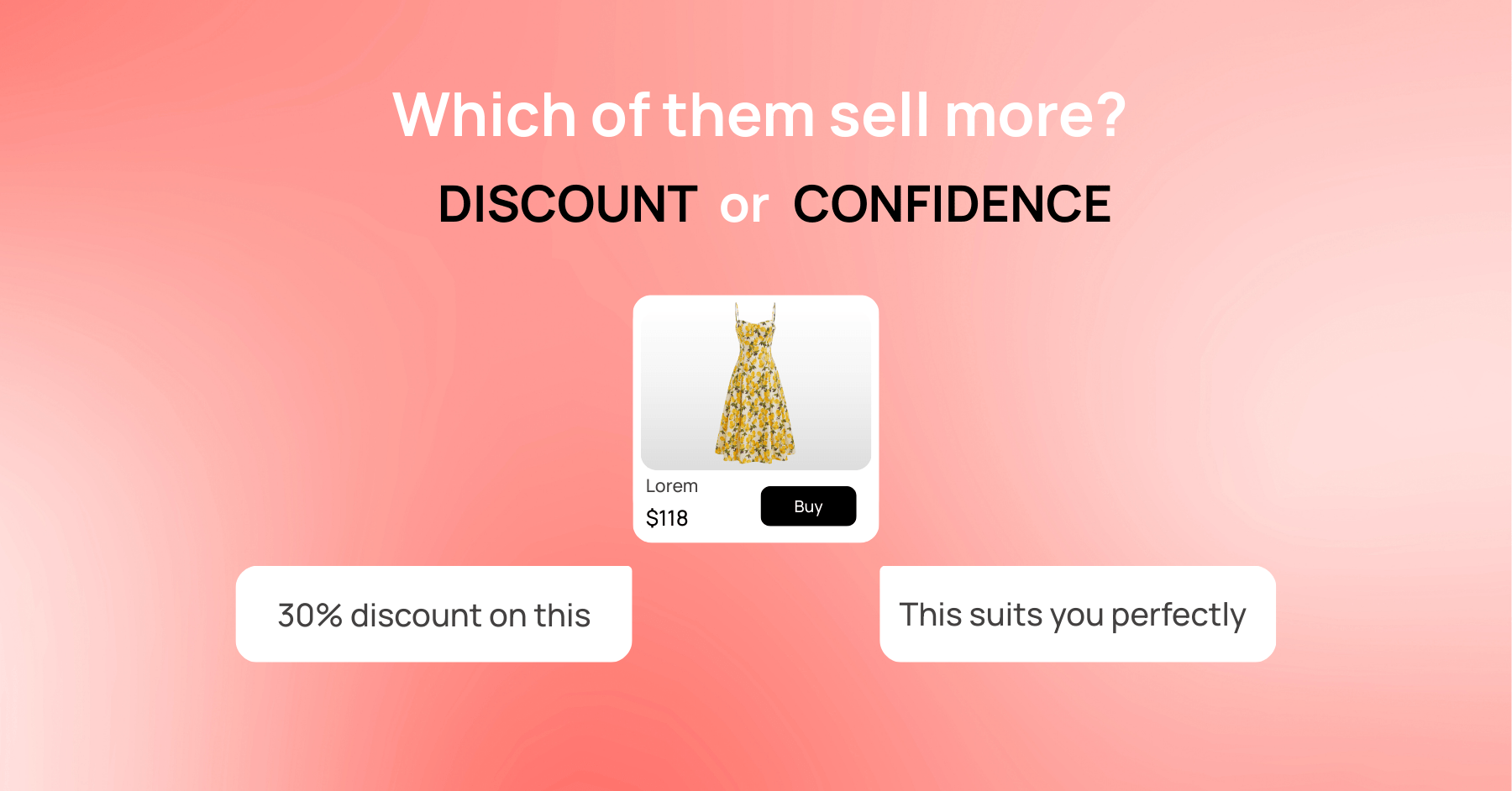
This article is part of our Master Guide to AI Styling for Shopify Fashion Stores, focused on moving from the passive ‘Silent Store’ model to a proactive Agentic Stylist experience that boosts conversion rates, Average Order Value (AOV), and customer retention while slashing return rates.
How the psychology of confidence drives fashion purchases online, why discounts often fail, and how an AI stylist creates certainty that converts.
She tried on a dress in a boutique, paused, and almost put it back on the rack. Her friend stepped in, smiled, and said, “That is so you. Try it with these heels.” In two minutes she had a complete look, felt certain, and left with two items at full price. That same shopper, later that night, hovered over a product page with a 20 percent off badge and abandoned her cart. The price was lower, but the certainty was missing.
This is the core truth for fashion retailers. Confidence is the conversion engine. Discounts are only a bandage. If you are a Shopify fashion store owner, understanding how confidence works, how discounts interact with it, and how to recreate the friend-or-stylist moment online is the difference between short-term spikes and lasting growth.
What follows is a clear, practical deep dive into the psychology behind confidence and discounts, inspired by offline behavior, and a detailed view of how an AI stylist recreates those confidence-building moments at scale.
The Psychology of Confidence: Why Fashion Shoppers Hesitate
Fashion purchases are different from most ecommerce choices. Buying clothes is not just about utility. It is about identity. When a shopper buys a dress, coat, or pair of shoes, they are saying something about who they are or want to be seen as. That makes fashion a high-stakes decision, emotionally loaded and prone to hesitation.
The 5 Psychological Levers of a Fashion Purchase
- Identity and self-image. Shoppers want assurance that an item will express the intention they have in mind, professional, playful, sexy, understated. Confidence makes that alignment feel real.
- Perceived risk and loss aversion. The fear of looking wrong, wasting money, or feeling uncomfortable is real. That fear raises the bar for purchase.
- Anticipated regret. Buyers imagine future moments of embarrassment or disappointment. Reassurance reduces that imagined pain.
- Mental simulation and ownership. When someone can picture themselves wearing an outfit, how it moves, how it looks with their hair or shoes, they mentally own it, and value increases.
- Social validation. A nod from someone trusted, a friend or stylist, collapses doubt faster than any numeric discount.
Nearly 70 percent of fashion shopping carts are abandoned simply because shoppers aren’t sure about fit or suitability. It’s a clear signal that lack of confidence is one of the biggest conversion blockers.
Bold point: confidence raises willingness to pay, shortens decision time, increases average order value, and reduces returns. It is the multiplier that turns interest into conviction.
Discounts vs. Confidence: Why Price Drops aren’t Enough
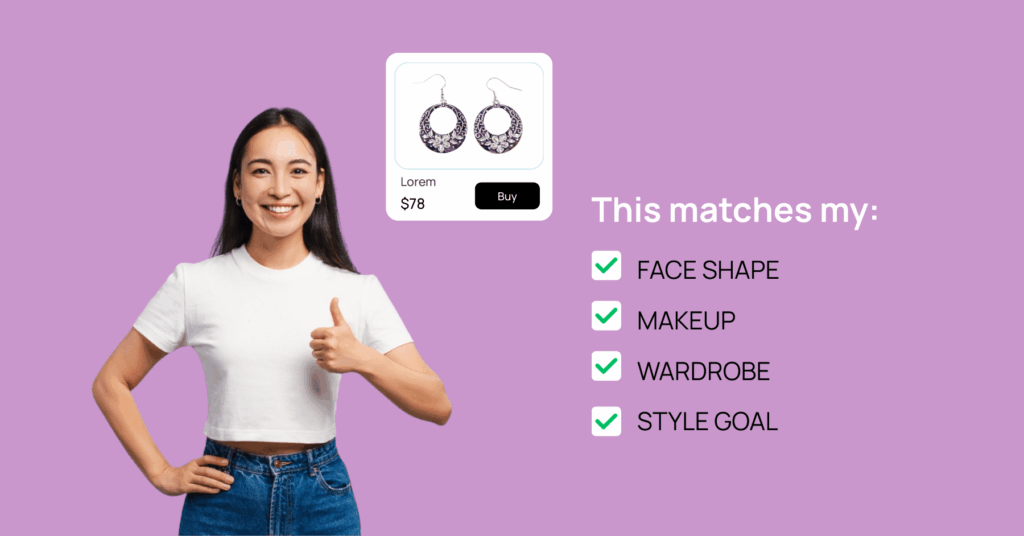
Discounts do one thing well, they lower monetary friction. A price drop can push someone across the final line when everything else is already aligned. But discounts do not fix psychological friction. If a shopper is unsure about fit, color, or whether the item matches their identity, a percentage off is often irrelevant.
Common dynamics of discounts
- Discounts attract deal-hunters who may not be loyal, and who may only buy when prices are low.
- Frequent discounts can signal low quality or clearance stock, which can reduce trust and thereby lower confidence.
- A discount can create urgency in the presence of confidence, but it cannot create confidence on its own.
Short takeaway: Discounts buy attention. Confidence buys conviction. Use discounts smartly, but do not depend on them to solve doubts about fit, style, or suitability.
Replicating the Boutique Experience: The Role of the Human Stylist
The in-store experience reveals the mechanisms we need to replicate online. Watch how a confident purchase happens in a boutique.
- Personalized, immediate feedback. A friend says, “That color lifts your complexion,” and the shopper hears validation tailored to them.
- Outfit context. The stylist pairs the dress with shoes and accessories, helping the shopper imagine a real look.
- Tactile and visual proof. Feeling fabric, seeing how it moves in the mirror under store lighting, and trying different sizes removes uncertainty.
- Iterative correction. The stylist suggests a different size or cut, and the shopper immediately sees the alternative.
- Social proof and authority. A nod from an experienced stylist or a compliment from other shoppers gives permission to buy.
These are not mystical. They are repeatable design patterns. The challenge is to translate them into the language of the screen.
Translating those offline mechanisms into online confidence
To turn browsing into buying, your online experience needs to recreate the same levers the physical world uses:
- Tailored reassurance instead of generic badges.
- Visual context and outfit curation instead of isolated product photos.
- Accurate fit guidance and clear trial and return information to reduce perceived risk.
- Social proof at the precise moment of doubt, not buried below the fold.
- A conversational, guiding experience that asks just enough to personalize recommendations.
When these patterns are present, shoppers mentally simulate wearing the product, imagine how it fits with what they already own, and receive social validation. That combination produces confidence, and confidence produces full-price purchases and lower returns.
How iWAND AI Stylist Recreates Personal Styling on Shopify
iWAND is not a discount engine. iWAND is a confidence engine. It is the personal stylist that meets each visitor where they are and removes the doubts that stop purchases. Here are concrete ways iWAND builds the friend-or-stylist moment into your Shopify product pages and flows.
- Conversational onboarding, tailored to the visitor. iWAND asks about appearance and preferences in two to three natural questions. Example: “Are you shopping for a date night or something for work?” and “Do you prefer fitted or relaxed silhouettes?” Those quick answers let the AI recommend looks that align with intent, body preferences, and the shopper’s identity. For a date night, iWAND can surface outfits that visually elongate the silhouette and pair them with heel suggestions and styling tips that make the shopper feel taller and more confident.
- Wardrobe-aware suggestions. Visitors can upload photos of their existing wardrobe or describe what they already own. iWAND then recommends outfits that integrate those pieces, answering the internal shopper question, “Will this actually work with what I own?” When the AI shows a shopper how a new jacket pairs with their white sneakers and favorite jeans, the perceived fit in the life context increases dramatically.
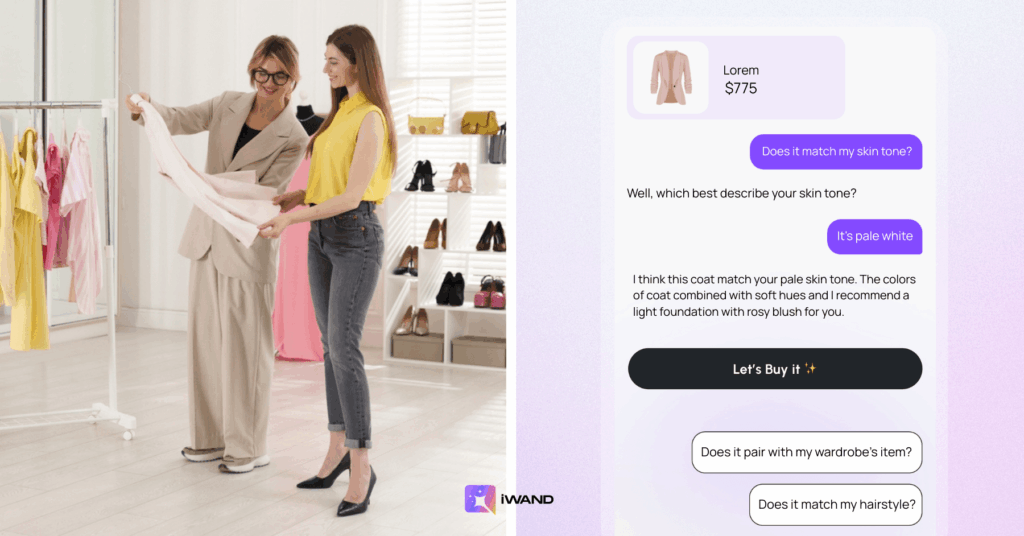
- Item-level consultation on product pages. If a visitor hesitates about whether an item suits their skin tone, makeup style, hairstyle, or existing shoes, they can consult the AI stylist right on the product page. The shopper can type or speak concerns like, “Will this blush tone work with my warm skin?” or “Will this neckline fit with my short haircut?” iWAND replies with trusted-stylist language, concrete comparisons, visual examples, and quick pairing suggestions, turning abstract doubt into specific, addressable feedback.
- Practical detail guidance for sensitive shoppers. iWAND answers practical questions about care and fabric sensitivity, such as “Is this fabric hand-wash only?” or “Will this be rough against sensitive skin?” These answers reduce fear of post-purchase regret and increase confidence to buy.
- Micro-copy and stylist notes that feel human. Instead of cold badges, iWAND inserts designer-like notes into the chat and product display, for example, “Styled for petites, size down one for a closer fit” or “Looks great with low block heels and a neutral lip.” These micro-reassurances act like a friend’s recommendation.
- Bundled, confidence-first offers. Rather than defaulting to a discount, iWAND suggests a curated bundle, a complete look that answers the shopper’s occasion query. Bundles raise average order value while reducing the friction of styling decisions.
Concrete evidence that confidence-focused personalization works: getting personalization right typically drives a 15 to 20 percent revenue uplift for retailers, a direct business signal that tailoring the experience and reducing shopper uncertainty pays off.
Together these features make the shopping experience feel less like a gamble and more like advice from a trusted friend or stylist. iWAND does not replace your product. iWAND makes your product make sense for each visitor.
Boost Confidence With Your AI Stylist
AI stylist for Shopify fashion stores that turns browsers into loyal buyers.
Free, no code, no setup stress
Conclusion: Making Confidence Your Core Shopify Strategy
Confidence converts into sustainable revenue: higher conversion rates without margin erosion, higher average order values when shoppers buy full looks, and fewer returns because shoppers feel certain the product suits them.
Closing: a simple invitation
If discounts are your default lever, you are trading short-term volume for long-term margin and loyalty. If you build confidence, you build a repeatable engine of full-price purchases and lower returns.
iWAND positions your store to capture that engine. It acts as a personal stylist for every visitor, answering doubts, curating outfits, and creating the kind of certainty shoppers get from a trusted friend. If you want to see how confidence feels on your product pages, let’s talk, and we will show three immediate ways iWAND can reduce doubt and increase conviction on your Shopify store.
Confidence sells. Make it your strategy.